REVIEW · LARNACA
Full-Day Tour UNESCO Churches and Kalopanayiotis in Cyprus
Book on Viator →Operated by iTaxi Cyprus · Bookable on Viator
Six UNESCO churches, one mountain-day route. This full-day trip from Larnaca strings together UNESCO-listed Byzantine churches and small villages you’d normally skip on beach-heavy days, with each stop kept to about 45 minutes. I like that admissions are free at every church on the route, which helps your day feel like value rather than a fee-by-fee checklist. I also like the human touch in the driving and storytelling—people have praised guides/drivers such as Fytos, Maria, and Chyso for giving useful Cyprus context and even calling ahead so churches are open when you arrive. One possible drawback: there’s no lunch included, so you’ll want to plan food and snacks for a long 8–9 hour day.
What you’re really buying is a focused inland day, away from the coast—air-conditioned transport, pickup and drop-off, and a route designed around paint-covered walls and stone chapels in the Solea Valley and Troodos foothills. The churches are the star, but the mountains and village atmosphere are the quiet bonus. Just keep in mind the tour requires good weather, so plan for a day that can shift if skies don’t cooperate.
In This Review
- Key highlights you’ll actually care about
- A UNESCO Byzantine church day around Larnaca that’s built for real viewing
- Stop-by-stop: what each church is, and what to look for
- Why the 9-hour structure feels better than a rushed bus tour
- The value equation: is $240.32 a good deal?
- What I’d watch for before you book
- Who this UNESCO churches day fits best
- Should you book this day trip?
- FAQ
- What time does the tour start?
- How long is the full-day tour?
- Is pickup included in the price?
- Are entrance fees included for the churches?
- Is lunch included?
- Do I get a professional tour guide?
- What language is the tour offered in?
- What if the weather is bad?
Key highlights you’ll actually care about
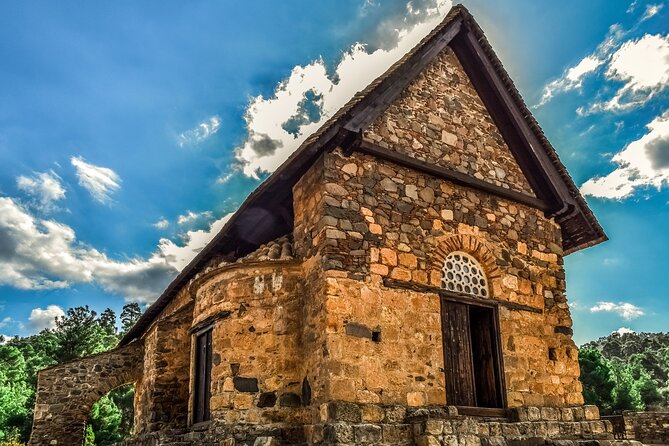
- Free admission at six UNESCO churches keeps your budget under control
- 45-minute stops make the schedule feel steady instead of rushed chaos
- Mountain villages give you a different side of Cyprus than the shoreline
- Driver-led storytelling (often with history and context) without paying for a separate guide
- Choreographed timing—some drivers call ahead to help churches be open
A UNESCO Byzantine church day around Larnaca that’s built for real viewing
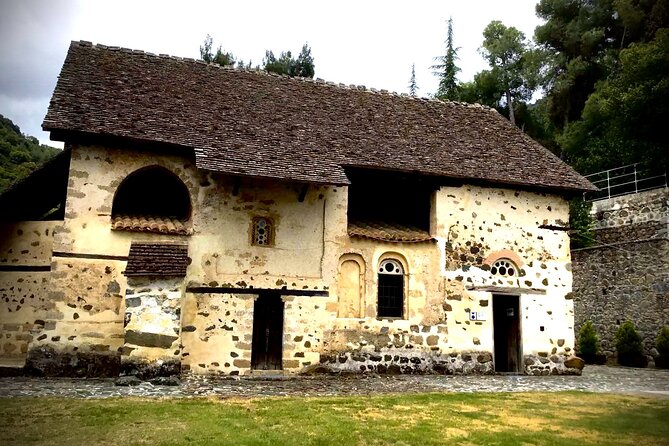
If your Cyprus wish list includes Byzantine art, this is the kind of tour that makes the art readable. You’re not bouncing between random monuments with no time to look. Instead, you get repeated doses of the same theme: churches where wall paintings matter as much as the building.
The route is especially strong because it focuses on UNESCO-listed sites tied to early Christian and Byzantine-era Cyprus. The paintings aren’t decorative background; they’re the story. When you see the range—from 11th-century painting layers to later work that stretches into the 17th century—you start to understand how these places kept their religious importance for centuries, not just for a season.
This is also a practical day. Pickup and drop-off from your area means you’re not piecing together buses or rental logistics while trying to stay on schedule. And because it’s private, it’s only your group in the vehicle, which keeps stops and timing feeling controlled rather than like you’re being shuttled with strangers.
A few more Larnaca tours and experiences worth a look

Stop-by-stop: what each church is, and what to look for
Under this “45 minutes per stop” rhythm, you’ll want to show up ready to look at walls first, not just photos second. Here’s what each stop is bringing to the table.
Panagia Asinou Church
Panagia Asinou is an UNESCO World Heritage Site and known for one of the best sets of Byzantine wall paintings on the island, spanning roughly the 12th to the 17th centuries. That range is key: it’s not just one era frozen in time. It’s evidence of how art and religious spaces evolved while still staying connected to the same sacred function.
For your 45 minutes, I’d focus on two things:
- The overall composition first, to get the layout of scenes and figures.
- Then go back for close reading of details, if the lighting and viewing angle allow.
The stop note says admission ticket is free, so you’re not paying to get in on top of the tour cost. That makes it easier to spend your time on looking, not budgeting.
Church of Panayia Podhithou in Galata
In Galata village, you’ll see the Church of Panayia (The Virgin) Podhithou, also UNESCO-listed. This is another wall-painting stop, and the fact that UNESCO lists it matters because these aren’t just “nice churches.” They’re important enough to be protected and documented as part of the island’s heritage.
What I’d do with your time here:
- Spend the first few minutes orienting yourself—where the main scenes sit inside the church.
- Then look for what feels most distinctive compared to the previous stop, even if it’s subtle (style, color balance, or how scenes are organized).
Because the admissions are noted as free again, this is where the day’s value really adds up.
Church of Saint Nicholas of the Roof (Solea Valley)
This one is easy to remember because of its name: the Church of Saint Nicholas of the Roof. It’s located in the Solea Valley and is UNESCO-listed. The standout detail: it’s described as the only surviving monastery church of its kind on the island, and it’s fully covered in wall paintings from roughly the 11th to the 17th centuries.
That’s a big deal. When a place is “entirely covered” you don’t just see paintings—you’re surrounded by them. Your 45 minutes go faster, so prioritize:
- A wide view to take in the painting coverage.
- Then a couple of close looks, so you still get meaning from the details.
One practical upside is that a good driver/guide team will often help by setting expectations on what you’ll see and how to make sense of the layers. People have specifically praised drivers like Maria for helping churches be open when you arrive, so you’re not stuck outside when you’re ready to see the inside.
Monastery of Saint John Lampadistes
Agios Ioannis Lampadistis (Monastery of Saint John Lampadistes) is a different flavor: the church was built in 1731, but the saint’s tomb is dated to the 12th century. The tour also notes specifics you can actually notice on site—like the saint’s tomb under the narrow north-eastern arch, and the saint’s skull in a niche.
This is the stop where the day becomes more than “art viewing.” It gets physical and human in a way that’s easy to grasp: a place that connects art, architecture, and the veneration of a real individual.
To make the most of it, I’d keep your eyes moving:
- Start with the church interior and paintings.
- Then switch your attention to the areas tied to the tomb and the niche, as you’re guided to what’s where.
Again, admission is listed as free on the itinerary.
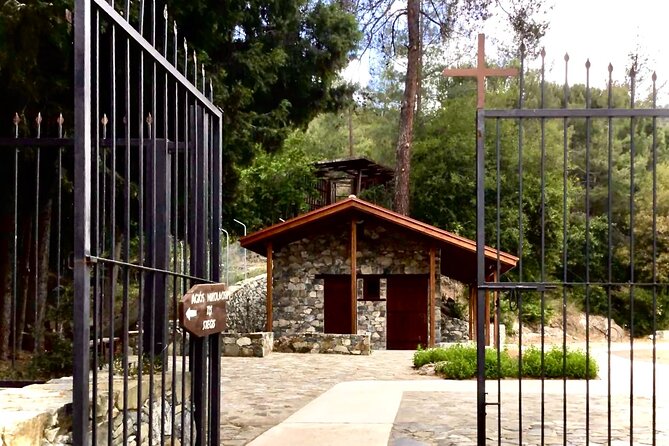
Panagia tou Moutoulla
Panagia tou Moutoulla is a tiny 13th-century chapel in the mountainous region of Moutoulla, and it’s UNESCO-listed. It’s described as one of the earliest examples of its type, which matters if you like understanding why a specific building style is historically important.
Tiny chapels can be tricky on tours because there’s a lot of “look quickly and move on” energy. But that’s where the 45-minute stop helps. You can slow down and actually notice how “small” shapes the feeling of the place—how proportions and stone work tell you this wasn’t built for crowds.
If you care about architecture as much as paintings, this is a good pause point. The route gives you big painting-rich churches and then brings you back to a smaller, early design that changes the mood.
Admission is free again, per the stop info.
Church of Archangelos Michael (Pedoulas)
In Pedoulas, you’ll visit the Archangelos Michael Church. It’s a small church decorated and built in 1474 by a local painter named Minas from the area of Marathasa. It’s UNESCO-listed, and the key hook here is the creator: a named painter and a known date.
That date and name help you connect the art to a real person instead of treating it as anonymous decoration. For your viewing time, focus on:
- The style differences from earlier stops.
- Any areas where the painting approach feels distinct or more refined (even within a limited time window).
If you like the “who made this” angle, this is where that curiosity is rewarded.
Why the 9-hour structure feels better than a rushed bus tour
A lot of Cyprus tours run on autopilot: lots of stops, minimal time, quick photo then out the door. This one stays closer to a rhythm that makes sense for churches.
Here’s the practical math: six stops at about 45 minutes each is around 4.5 hours of viewing time. Add travel between villages, and you land in that 8–9 hour total window starting at 9:00 am. That matters because you’ll arrive with enough daylight and energy to actually look, not just wander.
Also, the itinerary notes admission ticket free at each stop. That’s not just a money win. It affects behavior. When you don’t need to think about extra entry fees, you’re more likely to use your time well—linger, compare scenes, and step back to get perspective.
The value equation: is $240.32 a good deal?
At $240.32 per person, this isn’t a cheap “hop on a bus” afternoon. But it’s also not priced like a high-end, all-inclusive luxury package, and the lineup is heavy on UNESCO sites.
Here’s how I’d judge the value based on what’s included:
- Pickup and drop-off: you’re not spending time arranging separate transport.
- Air-conditioned vehicle: important for summer and warm shoulder seasons.
- Private transportation: only your group in the car.
- Mobile ticket and English service.
Now the trade-offs:
- Lunch isn’t included, so you’ll need to budget for food and snacks.
- A professional tour guide isn’t listed as included, though the driving team often provides helpful context. Reviews specifically mention drivers such as Maria and Chyso sharing history and calling ahead to help with access.
So the real question is: do you want a day where the logistics are handled and the stops are art-centered? If yes, the price starts to make sense. If you’re a DIY planner who already knows the UNESCO church locations and opening times, you might compare costs differently.
What I’d watch for before you book
This tour has a simple vibe, but a few considerations can affect your experience.
First, churches depend on opening and access. One reason some guides (like Maria) have been praised is the habit of calling ahead to make sure each church is open when you’re there. Even with that, you’ll want to accept that religious sites can have variable conditions.
Second, plan for a long day with no lunch included. Even if you buy food on the way, it can cut into time for the villages. Bring snacks if your group needs them.
Third, the tour needs good weather. If conditions are poor, you may be offered a different date or a full refund. Cyprus inland roads can be fine in normal weather, but the operator flags this because the day relies on travel and outdoor mountain views between stops.


Who this UNESCO churches day fits best
This is a great match for:
- People who want UNESCO Byzantine wall paintings without building a route themselves.
- Visitors who prefer a structured day with short, focused stops instead of long museum-style sessions.
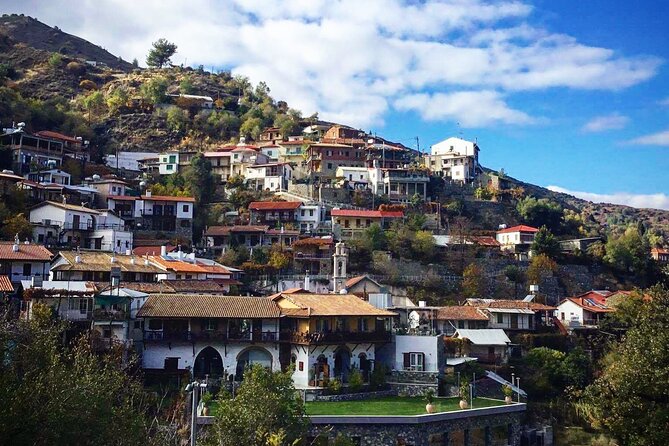
- Travelers who like inland Cyprus—village routes, valleys, and churches that change the feel of the island.
It’s also ideal if you’re going with a small group that benefits from private transport. The “only your group will participate” setup tends to keep the experience calm.
If you need a beach-to-chill day with lots of free time, this won’t be that. It’s a church-and-driving day, from start time to finish.
Should you book this day trip?
I’d book it if your heart leans toward Byzantine art, if you’re excited by UNESCO-listed wall paintings, and if you’d rather spend the day looking than figuring out transport. The standout value is the pattern: multiple UNESCO churches, each with free admissions, visited in a schedule that gives you enough time to actually see.
I’d think twice if you strongly need a guaranteed lunch break, want a separate professional guide rather than driver-led context, or hate the idea that weather could shift plans. If that describes you, you can still enjoy the churches—but you’ll want to be flexible.
Overall, this is one of those Cyprus experiences that trades beach time for meaning. You come away with a different mental map of the island: not just coastlines, but the spiritual and artistic weight of its inland towns and chapels.
FAQ
What time does the tour start?
The tour starts at 9:00 am.
How long is the full-day tour?
It’s listed as 8 to 9 hours approximately.
Is pickup included in the price?
Yes, pickup and drop-off are included. If your hotel isn’t listed, you’ll need to provide your exact address details.
Are entrance fees included for the churches?
Admission ticket info for each church stop is listed as free.
Is lunch included?
No. Lunch and meals (including breakfast, snacks, wine, and soft drinks) aren’t included.
Do I get a professional tour guide?
A professional tour guide is not listed as included. The tour includes transportation, and you’ll receive information as part of the experience, but the listing does not specify a professional guide.
What language is the tour offered in?
The tour is offered in English.
What if the weather is bad?
The tour requires good weather. If it’s canceled due to poor weather, you’ll be offered a different date or a full refund.