A border city on foot changes everything fast. This private 3-hour walk through Nicosia shows you how layers of empires still shape daily life, from Ottoman details to Venetian symbols. I love the private flexibility that keeps the pace comfortable, and I love that you get a guide who makes the whole story click instead of just pointing at stones. If your guide is Sirin, expect a smooth, organized route and clear explanations that connect the Greek and Turkish sides.
One thing to keep in mind: you’ll deal with border procedures, so bring your passport and be ready to follow checkpoint rules. Also, while the tour covers both sides of the capital, your depth of focus can depend on the guide’s strengths, so if you care most about one side, ask early what balance you’ll get.
In This Review
- Key highlights worth your time
- Nicosia feels like two cities in one walk
- Price and group size: what you really pay for
- Before you go: meeting point, timing, and what to bring
- Start at Ledra Street Crossing Point: where the story turns practical
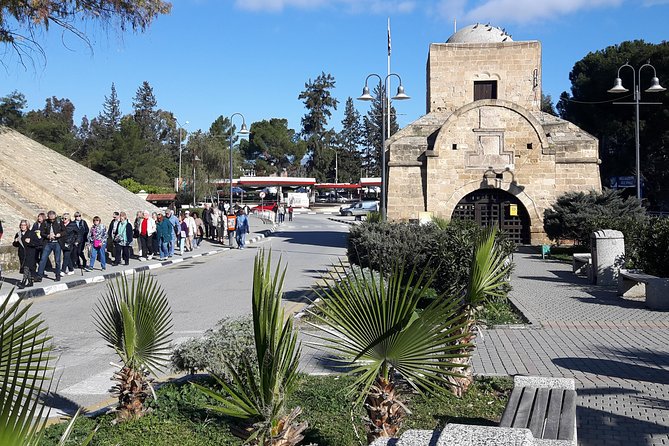
- Kyrenia Gate: the walled city’s old entrance
- Samanbahce Quarter: Ottoman-era planning and a cistern at the center
- The Venetian Column and St. Mark’s Lion: symbolism you can spot
- Selimiye Camii: a Cathedral turned Mosque
- Buyuk Han: the easy break with real Cypriot comfort
- Famagusta Gate and Archbishop’s Palace: big impact photo stops
- Crossing back at Ledra Street: end where the day started
- Private guide quality: Sirin’s pacing, plus how to manage the balance
- Who should book this tour (and who might skip it)
- Should you book Divided Capital Nicosia?
- FAQ
- How long is the Divided Capital Nicosia tour?
- Where does the tour start and end?
- Is the tour private?
- What language is the tour offered in?
- Do I need admission tickets for the stops?
- What should I bring for the border crossing?
- Are there any age requirements for children?
- What if I need to cancel?
Key highlights worth your time
- Ledra Street Crossing Point: walk through the practical reality of a divided capital
- Kyrenia Gate and Venetian Column: see the walled city’s old bones plus St. Mark symbolism
- Selimiye Camii: a Cathedral turned Mosque, with visible layers of rule
- Buyuk Han coffee break: time to stretch and enjoy Cypriot classics like borek
- Photo stops at iconic gates and palaces: a lot of impact with minimal wandering
Nicosia feels like two cities in one walk
Nicosia is the kind of place where history isn’t stuck in a museum. It sits in streets, in walls, in church-cum-mosque buildings, and in the reality of a border that you actually walk to and cross. In a short time window, this tour helps you get your bearings fast and understand why the city works the way it does.
The route is built around the old walled city and the landmarks that mark each era. You’re not just chasing photos. You’re learning how the walled layout, Ottoman-era planning, and Venetian symbolism all still matter in modern Nicosia.
If you like your travel with structure, this works well. It’s paced so you can keep up without rushing, and it includes quick stops where you can actually listen and absorb.
You can also read our reviews of more tours and experiences in Nicosia.
Price and group size: what you really pay for
You’re paying $216.86 per group for up to four people, not per person. That matters because dividing a group cost can turn a guided experience into good value, especially compared with per-person tours in major cities. Since it’s private, you’re not stuck waiting for other people who move at different speeds.
The 3-hour duration is also part of the value equation. You get a concentrated route through major sights and a border-crossing experience without losing half a day to logistics. If your schedule is tight, this is one of the more efficient ways to understand divided Nicosia.
One practical note: adults should plan around passport and checkpoint timing. The tour is designed to run smoothly, but your day should have a little buffer for real-world border procedures.
Before you go: meeting point, timing, and what to bring

Meet up at Ledras, Nicosia 1011, Cyprus, which also happens to be where the tour ends. That round-trip setup is helpful: you’re not stranded far from where you started, and it’s easier to plan lunch afterward.
The tour runs Monday to Saturday, 9:00 AM to 1:00 PM (service dates span a long period). Since it’s offered in English, you can settle in quickly without translation games.
Bring your passport and keep it handy for checkpoints. The tour uses a mobile ticket, so have your phone charged. Service animals are allowed, and the general pace is described as suitable for most people, but this is still a walking tour across city streets and steps around historic sites.
Also note the simple rule: children under 12 must be accompanied by parents.
Start at Ledra Street Crossing Point: where the story turns practical
The experience starts at the Ledra Street Crossing Point. That’s the moment the trip shifts from sightseeing to lived geography. Even if you’ve read about the division, walking up to the crossing makes the idea concrete.
Your guide sets expectations, then you head into the walled-city sights. This structure works because you see the border, then you spend the next hours understanding what the border is protecting and what it cut through.
Plan for a calm mindset here. You’re not racing. You’re following procedure and listening as the tour connects modern lines with centuries of political change.
Kyrenia Gate: the walled city’s old entrance
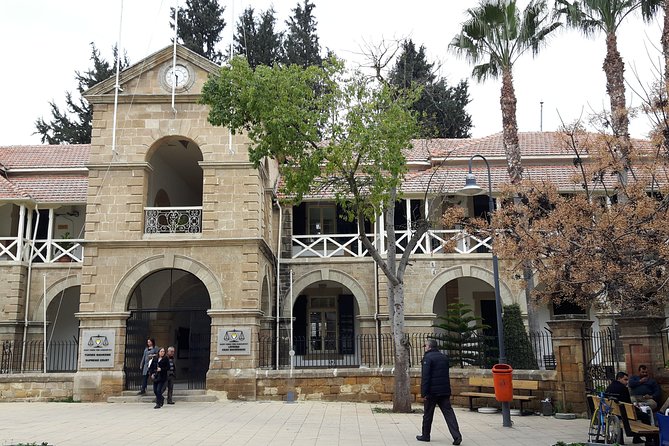
Your first stop is Kyrenia Gate, one of the oldest ways into the walled city of Nicosia. Gates like this weren’t decorative. They controlled movement, trade, and defense. So when you stand near one, you’re looking at an urban system, not just a relic.
It’s a short stop, around 20 minutes, and there’s no admission ticket required. That makes it a great “first rhythm” stop: enough time to understand what you’re looking at, without burning your energy before you’ve warmed up.
If you’re the type who likes architecture and city planning, this is your anchor point. Everything that follows makes more sense once you grasp the wall logic.
Samanbahce Quarter: Ottoman-era planning and a cistern at the center
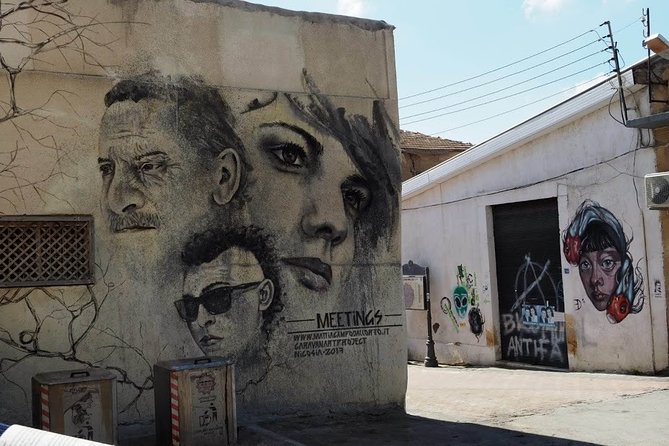
Next up is the Samanbahce Quarter, built in 1900 by Ottoman Saban Pasa. The key idea here is social infrastructure. The area included 72 houses allocated to people in need, so you’re seeing a form of urban care rather than only grand monuments.
In the center, you’ll also see a cistern. That detail is more important than it sounds. Water storage is what lets a city survive dry spells, conflict, and population changes. It’s one of those practical Ottoman touches that quietly shaped daily life.
This is typically a quick stop, about 10 minutes, and again there’s no admission ticket. If you’re thinking of how cities function under stress, pay attention here. It’s the kind of stop that makes you see Nicosia differently afterward.
The Venetian Column and St. Mark’s Lion: symbolism you can spot
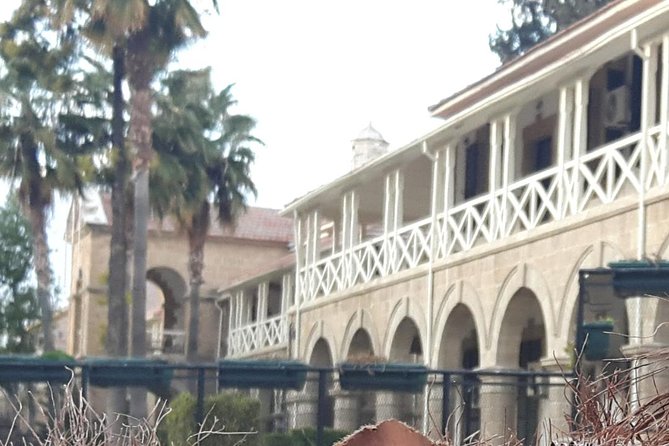
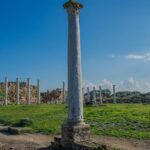
Then you reach the Venetian Column, brought to Nicosia from Salamis during the Venetian period. The big visual cue is the symbol of St. Mark’s lion on top.
Even with a short 10-minute stop, the guide’s explanation turns the column into something legible. You learn how Venetian power was displayed in conquered or administered areas, not just through buildings but through symbols meant to communicate authority.
This is a good moment to slow down and really look. The column is small enough that it’s easy to glide past. Don’t. If you care about how empires brand themselves, this stop delivers.
Selimiye Camii: a Cathedral turned Mosque
Selimiye Camii is one of the most striking stops on the route. It began as a Cathedral under the Lusignans, then changed course when the Ottomans arrived in 1570. They added minarets and converted it into a mosque.
It was known as Ag. Sophia Mosque until 1956, and later it became Selimiye Mosque. That timeline gives you more than trivia. It shows how sacred spaces get rewritten when political control changes.
Expect this stop to last about 20 minutes, with no admission ticket required. This is a strong choice for anyone who likes “layered architecture,” meaning places where different eras leave visible marks instead of starting from scratch.
Buyuk Han: the easy break with real Cypriot comfort
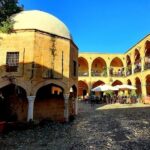
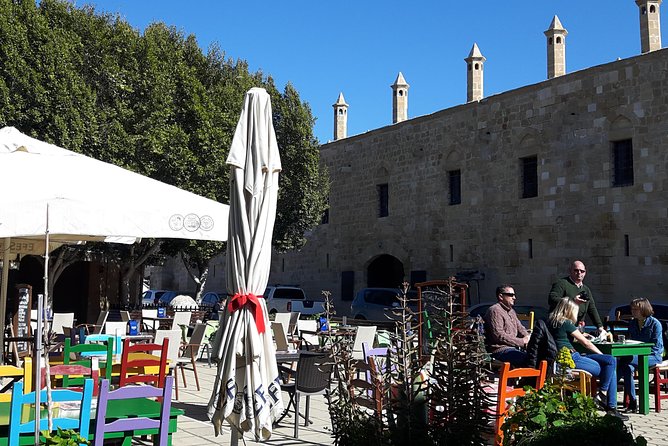
At Buyuk Han (built in 1572 by Muzaffer Pasha), you’ll see a central cistern and a mescit. It’s a classic caravanserai-style structure, designed for travelers and commerce, and it still works as a gathering point.
This stop is around 40 minutes, so it’s the built-in breather of the tour. It’s also where you can realistically plan a snack without derailing the schedule.
You can stretch your legs and enjoy a taste of Cyprus, including Cypriot coffee and traditional borek. You don’t need to treat this like a formal meal. It’s a practical pause that makes the rest of the walk feel easier.
If you’ve ever done history tours where everything blurs together, this is the checkpoint that helps you reset your attention.
Famagusta Gate and Archbishop’s Palace: big impact photo stops
After the coffee break, you head to Famagusta Gate, one of the main gates that surround Nicosia. You’ll walk by and take photos while your guide shares the gate’s history.
Then there’s a stop near the Archbishop’s Palace. This part of the route is more about perspective than deep inspection. You’re getting moments that help you connect the walled-city layout to the social and religious power centers that shaped the capital.
Both are photo-friendly stops, designed to keep momentum without turning the tour into a tedious string of long lectures. If you prefer to learn by looking, this portion works.
Crossing back at Ledra Street: end where the day started
The tour ends back at the Ledra Street Crossing Point, which is also where it started. That loop matters because it closes the circle: you see the border context first, then the historic landmarks, then you return to the practical reality again.
The end point being the same place you met makes it easier to continue your day. You can grab lunch nearby, jump into local transport, or head back to your hotel without wrestling with a complicated route.
This structure also gives the tour a clear arc. It starts with division, moves through centuries of rule, and finishes with the checkpoint reality again.
Private guide quality: Sirin’s pacing, plus how to manage the balance
A big part of why this tour scores so well is the guide experience. Guides like Sirin are highlighted for being attentive, patient, and organized, with pacing that feels right for a 3-hour format. There’s also mention of flexibility with timing, plus smart lunch suggestions afterward.
That said, one caution is worth repeating: if your goal is very specific—like focusing more heavily on the Greek Cypriot side or the Turkish side—ask your guide how they plan to balance the explanation. Some guides may lean more strongly in one direction depending on their strengths.
The good news: even when the focus shifts, the walking route still hits recognizable, meaningful landmarks that explain how the city got where it is today.
Who should book this tour (and who might skip it)
This tour is a great fit if you want:
- A time-efficient way to see major sites in divided Nicosia
- A guided walk that explains the city’s layers of rule
- A private group experience so you can move at your pace
- A route that includes the Ledra Street crossing point context
You might reconsider if:
- You dislike walking and prefer a mostly indoor experience
- Your schedule can’t handle passport/possible checkpoint delays
- You want only one side of Nicosia, because this route is designed to cover both
If you’re a history person, city-watcher, or you just like understanding how borders affect daily life, this is one of the stronger ways to get oriented quickly.
Should you book Divided Capital Nicosia?
If you want a guided, well-paced walk that connects the divided capital to centuries of architecture and politics, I’d book it. The private up-to-four setup makes it feel personal, and the mix of gates, symbolic columns, and a major converted church-mosque site gives you a lot to take in without feeling scattered.
Bring your passport, plan a calm morning, and consider asking your guide how they’ll balance the stories on each side. Do that, and you’ll come away with Nicosia feeling less like a headline and more like a place you can actually picture.
FAQ
How long is the Divided Capital Nicosia tour?
It runs for about 3 hours.
Where does the tour start and end?
The tour starts and ends at Ledras, Nicosia 1011, Cyprus.
Is the tour private?
Yes. It’s a private tour/activity for only your group, up to 4 people.
What language is the tour offered in?
The tour is offered in English.
Do I need admission tickets for the stops?
Admission tickets are listed as free for the stops included in the route.
What should I bring for the border crossing?
You must bring valid passports, since they may be needed to show at checkpoints.
Are there any age requirements for children?
Children under 12 must be accompanied by parents.
What if I need to cancel?
This experience is non-refundable and cannot be changed for any reason.